Nonfiction translations


“If Russia Wins: A Scenario serves as a succinct, high-impact warning of what happens when deterrence is eroded and alliances fail to act—in an age of hybrid war.”
Nordic Defence Review, on If Russia Wins
“Extraordinarily powerful, poignant and affecting. I was greatly moved”
Michael Palin, on The Crossing: My Journey to the Shattered Heart of Syria
“Raulff’s prose – or Ruth Ahmedzai Kemp’s translation – is lyrical and lucid”
Joe Culley, The Irish Times, on Farewell to the Horse
“At his best, Raulff constructs not just painterly layers of complementary information but wreaths of interconnected facts. In short order, he is capable of braiding together Degas, the thoroughbred, Cromwell, Francis Galton (Darwin’s cousin), George Stubbs, anatomical theaters and Muybridge, all before securing the wreath to itself with Degas again. Every few pages, he works this magic. Along these circuitous routes, his prose takes air, floating on the sheer joy of investigation and rumination. (His stirring examination of Kafka’s short story “Longing to Be a Red Indian” is alone worth the price of the book.)”
C.E. Morgan, New York Times, on Farewell to the Horse
“Today the horse is a creature from a lost pastoral myth. We commune with its spirit through literature and art, in the works of Flaubert, Tolstoy, Hardy, Kafka, Rosa Bonheur, George Stubbs and Edgar Degas. Raulff has given us an eloquent epitaph for the horse’s long relevance to our world.”
Melissa Holbrook Pierson, The Washington Post, on Farewell to the Horse
“A top-notch addition to the library of any cultured equestrian; highly readable from start to finish.“
Kirkus Reviews, on Farewell to the Horse
Fiction translations


“…the appeal of her writing less its whodunnit element than her near-tangible rendering of the sights, sounds and smells of the Soviet era.”
Sarah Weinman, New York Times, on Death of the Red Rider
“All the moral murk makes for fascinating reading, and Yakovleva never lets the historical detail crowd out the central mystery. This series has legs.”
Publishers Weekly, on Death of the Red Rider
“There’s a mordant theme to this month’s column; in three of the four books, dark humor undercuts despair and sardonic wit compensates for failure. Nowhere are these traits more on display than in DEATH OF THE RED RIDER, the second appearance of Yulia Yakovleva’s Stalin-era detective, Vasily Zaitsev, who goes about the ordinary business of solving murders while communities around him in 1930s Russia are purged and exiled en masse. This time Zaitsev is dispatched to Novocherkassk, a Soviet cavalry school in the south of Russia, to investigate the horrifying death of a famous rider and his horse midrace. Soon he’s given an assistant he didn’t ask for, Comrade Zoya Sokolova, who arrives with her own agenda. The events — aided by Ruth Ahmedzai Kemp’s nimble translation — unfold slowly, but hold the reader’s attention.”
New York Times, on Death of the Red Rider
“The collaborative translation between Ahmedzai Kemp and Copeland is admirable: in particular, the dialogue reads very well – there were times when I could visualise the characters’ interchange so clearly, it read almost like a playscript.”
Helen Vassallo, Translating Women, on Trees for the Absentees
“Set in the Soviet Union during the 1930s, Russian author Yakovleva’s outstanding U.S. debut, a series launch, captures the tense paranoid atmosphere of the period.”
Publishers Weekly, on Punishment of a Hunter
“While the plot has enough twists and turns to keep the reader guessing, it is the novel’s dark and menacing atmosphere, built up through telling detail, that is the strongest source of suspense. Punishment of a Hunter is as bone-chilling as a freezing winter fog over Leningrad.”
Fiona Graham, European Literature Network, on Punishment of a Hunter
“Beautifully translated by Ruth Ahmedzai Kemp and billed as the first in a ‘Leningrad Confidential’ series of detective novels, Punishment of a Hunter establishes Yulia Yakovleva as a talent to watch.”
Martin Doyle, The Irish Times, on Punishment of a Hunter
“Yakovleva and this translation by Ruth Ahmedzai Kemp has produced a startlingly clear portrait of the era laced with bite and a grim, satirical humour.”
Marina Sofia, Finding Time to Write, on Punishment of a Hunter
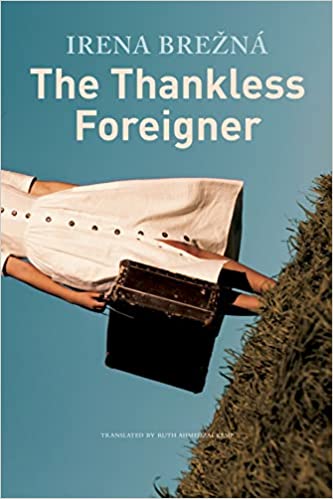
“The Thankless Foreigner not only provides a penetrating insight into the mind of one extremely prickly customer but is also proof of the tolerance of the Swiss. Some of the comments are so stinging, not every country would allow the novel’s publication, never mind award the 2012 Swiss Literary Prize.”
Lizzy Siddal, European Literature Network, on The Thankless Foreigner
Children’s book translations
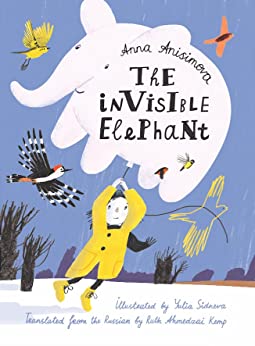

“THE INVISIBLE ELEPHANT is tirelessly cheerful. Four connected stories describe a friendly, impish girl with that nostalgic mix of curiosity about, and trust in, the world around her. She takes walks with her grandfather and his third foot (a cane he calls Speedy), sings with her mother like the birds in their garden and goes sledding on a ‘whale.’ In Kemp’s applause-worthy translation, verbs empower, descriptions tickle and exclamation marks abound. Everything is exciting and full of wonder.”
Aditi Sriram, New York Times, on The Invisible Elephant
“Gripping and at times quite surreal, the blend of historical fiction and magical realism set a striking atmosphere to provide a glimpse of Stalin’s campaign of political repression in the Soviet Union.”
BookTrust, on The Raven’s Children
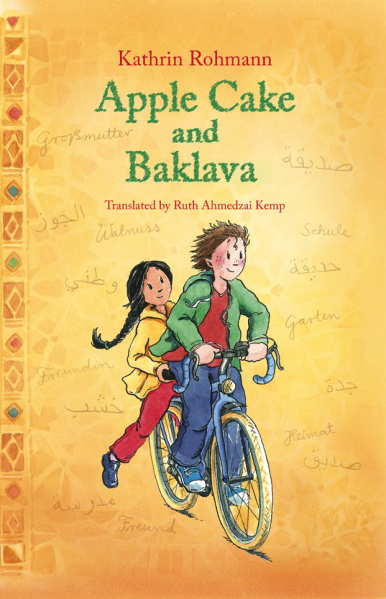
“This beautifully written book, in a pitch-perfect translation by Ruth Ahmedzai Kemp, will appeal to children between about eight and twelve. The narrative is complemented by Franziska Harvey’s evocative black-and-white illustrations. There is no doubt that this book deserves to be in primary schools throughout the UK and, indeed, the rest of Europe. It could hardly be more timely, or more urgent.”
Fiona Graham, European Literature Network, on Apple Cake and Baklava
“This is a powerful and moving book dealing with asylum, how it feels to be a refugee in a strange country and building new friendships. With an excellent flowing translation from Ruth Ahmedzai Kemp, this gentle story cleverly expresses emotion through food – Grandma Gertrude’s Apple Cake that is cooked with love and holds so many memories and Hassan’s Baklava that reminds Leila’s family of home. Sadly, Leila’s story is a universal and timeless one. The plight of refugees is rarely out of the news and Rohmann draws parallels between Gertrude’s experience during the Second World War, over 70 years before, and the current refugee conflict in Syria, demonstrating that their experiences are not so very different.”
Deborah Hallford, Outside In World, on Apple Cake and Baklava
Online samples of my work
- The hope of future Pan-African socialism: a bilingual excerpt of Brothers by Jackie Thomae (European Review of Books, 2024)
- A rather disproportionate intervention: a bilingual excerpt of The German Crocodile by Ijoma Mangold (European Review of Books, 2021)
- The Not-so-secret Life of the Stars – an extract of The Weather Detective, by Peter Wohlleben in my translation (LitHub, 2018)
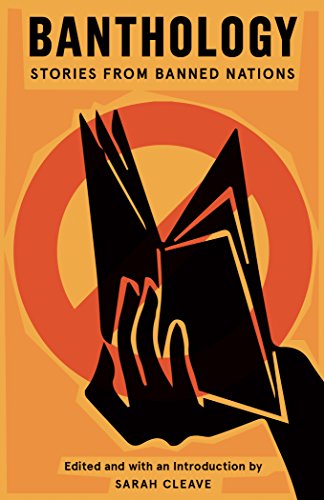
- Rania Mamoun, ‘Bird of Paradise’ (from Banthology, published by Comma Press UK and Deep Vellum USA, online at LitHub, 2018)
- Excerpt from Farewell to the Horse, by Ulrich Raulff (LitHub, 2018)
- Farewell to the Horse – Book of the Week, Radio 4, broadcast from 29 May 2017 (read by Iain Glen, abridged and produced by Jill Waters)
- Abbad Yahya, Crime in Ramallah (Words Without Borders, Divided Countries issue, 2017)
- Extract from The Crossing: My Journey to the Shattered Heart of Syria by Samar Yazbek (The Guardian, 2015; translated with Nashwa Gowanlock)
- Minouche, a short story by Anis Arafai (The Common, 2016)
- The turmoil of today’s world: leading writers respond to the refugee crisis. Contribution by Samar Yazbek (The Guardian, 2015)
- Extract from The Amman Bride by Fadi Zaghmout (here in Words Without Borders, subsequently published as The Bride of Amman by Signal 8 Press, 2015)
- Book review in The New Arab: Edward Said: The late author was just in time by Ziad Abdullah (2015)
- Two scenes from Will it Pass or Not? – a play by Lucien Bourjeilly (Index on Censorship, 2014)
- Essay ‘The New Divide: Why the world didn’t get better‘ by Thomas Rothschild (Index on Censorship, 2014)
- ‘Should Hitler’s “Mein Kampf” be republished?’ a debate between Sascha Feuchert and Charlotte Knobloch (Index on Censorship, 2014)
- The novelist vs. the revolutionary: my own Syrian debate by Samar Yazbak (The Washington Post, 2013)
- I write with blind eyes and forty fingers by Samar Yazbek (Index on Censorship, 2013)
 Ruth Ahmedzai Kemp